If you're thinking about divorce, you don't have to decide anything today. Most people start by understanding their options, what a divorce would cost and how money and children would be sorted out. Reading up commits you to nothing, and no one needs to know. This page sets out the choices and the first practical steps.
What are my options if my marriage is ending?
You have more choices than staying or divorcing. Some couples try relationship counselling first, and our directory lists counselling services. Others separate informally and live apart without involving a court, and some put the terms in writing in a separation agreement. Judicial separation is a court order that lets you separate formally without ending the marriage. Divorce is the only option that legally ends it. Separation or divorce compares them, and separation agreements explains what one can cover.
Can I get a divorce, and on what grounds?
You can apply for a divorce in England and Wales if you've been married for more than a year, your marriage has broken down permanently and one of you has a legal connection to England or Wales, such as living here. Since 6 April 2022 the law has been no-fault: you don't have to blame your spouse or prove a period of separation. A statement that the marriage has broken down irretrievably is enough, and your spouse can only dispute the divorce on limited legal grounds. No-fault divorce, explained covers how it works, and divorce in the first year of marriage sets out your options if you haven't reached a year.
How much does a divorce cost?
The court fee to apply for a divorce is £628 (GOV.UK), and couples who agree on everything can finish for not much more. Making a financial agreement legally binding with a consent order adds a court fee of £62. Costs rise when you need a solicitor to negotiate, or a judge to decide about money or children. If you're on a low income or certain benefits, Help with Fees can cover some or all of the court fees. See how much a divorce costs, try the divorce cost calculator or check every divorce and family court fee.
Do I need a solicitor to get divorced?
You don't need one to apply: you can apply online through GOV.UK yourself. Advice is worth paying for when there's a house, a pension or a business to divide, when your spouse already has a solicitor, or when you're not confident you've been told everything. Do I need a solicitor for a divorce? explains the options in between, and you can get matched with a family solicitor or mediator for free.
What are my rights if we're not married?
There's no such thing as common law marriage in England and Wales. However long you've lived together, separating couples who aren't married or in a civil partnership don't have the same rights as married couples to share property or claim maintenance for themselves. What usually matters is whose name is on the deeds, what you agreed and what you each paid for. Read the common law marriage myth and separating when you're not married.
What can I do now, before I decide?
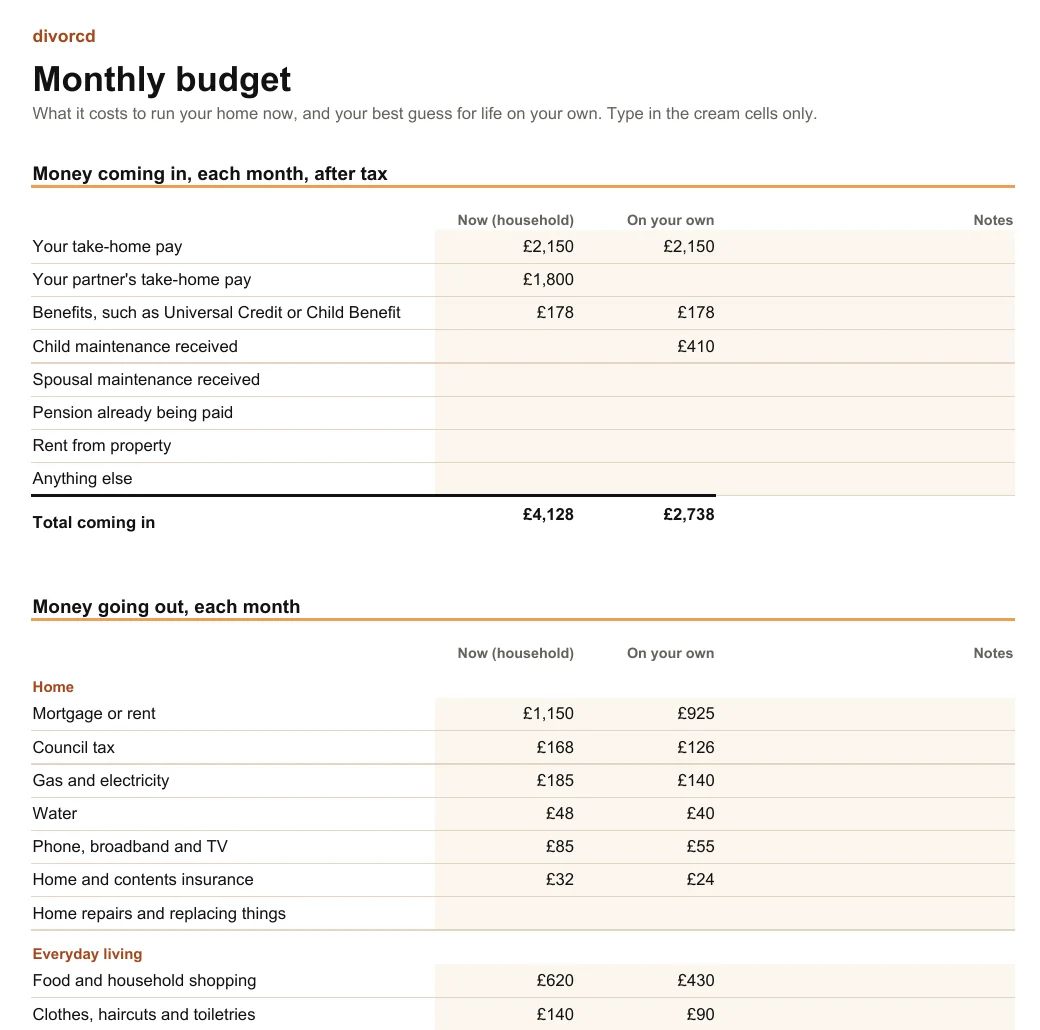
Get organised, quietly. Make a list of what you own and owe, find copies of bank statements, payslips, mortgage and pension details, and keep them somewhere private. Check your credit file and work out how you'd manage on one income. Getting organised before divorce has the full checklist, and am I ready to divorce? helps you tell doubt from a decision. If you feel unsafe at home, the helplines at the bottom of this page are free.